
Thursday, 28 March 2013

MDDN 241: HDRI Maps
For the bubble modelling tutorial I am following, I am using HDRI Maps to reflect images on my bubble to make it look more realistic.
I found the HDRI Maps here: http://smashmethod.deviantart.com/art/High-Res-HDRI-Map-Pack-3-10152791
They are free for non commercial use.
Here are a couple of screen shots of my tests so far.


I found the HDRI Maps here: http://smashmethod.deviantart.com/art/High-Res-HDRI-Map-Pack-3-10152791
They are free for non commercial use.
Here are a couple of screen shots of my tests so far.


Monday, 18 March 2013
CDDN 271: Tools for Investigation.
Decided to upload my first 271 assignment to my blog as well.
Everyday design.
This text by Henry Petroski talk about the design of objects that we use in our everyday lives (for example the potato peeler), and about their history, faults, and ways they can be improved. He also talks about the practicality of the materials these objects are made of and how suitable they are to the specific tasks they are used for. It is very detailed, and explains a lot about the design steps taken to get the potato peeler to the point it is at now. This will be useful to take examples from if I write about the topic of everyday design, and the author has written other texts similar to this which could be of use.
Petroski, H. (2001). Everyday design. American Scientist, 89(6), 495-499. Retrieved from http://search.proquest.com/docview
Google Warming.
This text talks about the launch of Google glass, which is a pair of glasses with built in camera and audio recording features, as well as internet connection and location tracking services. He also talks about how Google has control over majority of our interactions with the internet, and the lack of privacy these glasses bring about. He questions the integrity of Google, and where we are to draw the line on privacy invasion. This source if about a very current issue, so could be quite useful if I write about the Google warming topic.
Anderson, K. (2013). Welcome to the Surveillance Society of Google Glass – should we be worried or relieved?. Retrieved from http://scholarlykitchen.sspnet.org/2013/03/11/welcome-to-the-surveillance-society-of-google-glass-should-we-be-worried-or-relieved/
Critical Design.
This study talks about the concept of Critical design, and the creation of objects and how people react to them. It looks at the social and technological effects the objects have on society, and how society (or the consumer) reacts and discusses these effects. It also talks about beta-testing and how the responses of the people tested shapes the way things are designed, and influences the options and extra tools available with the object. This source did in-depth research about the topic, which will be useful if I write about Critical design.
Lee, Yong-Ki, & Lee, Kun-Pyo. (Unknown). Design research and the complexity encountered in people’s critical thoughts. Retrieved from http://www.designresearchsociety.org/docs-procs/DRS2010/PDF/074.pdf
DIY Design.
This text talks about the history of the Arts and craft movement (& DIY or homemade products) in detail, and then goes on to explain how this is movement was brought into modern society. It also talks about the benefits of DIY today and in recent years, and how DIY is used today. It also talks about the growth in popularity DIY has experienced, and why people are inclined to ‘Do it themselves” and the emotional attachment involved with arts and crafts or DIY. This source has a quite detailed history of the rise of arts and crafts and DIY which will be useful if I write about this topic.
Mucha, Nate. (2011). Do it Yourself: The Modern Arts and Crafts Movement.
retrieved from http://natemucha.com/includes/downloads/DIY_Modern_Arts_and_Crafts.pdf
Saturday, 16 March 2013
MDDN 241: Clockwork & Bubbles
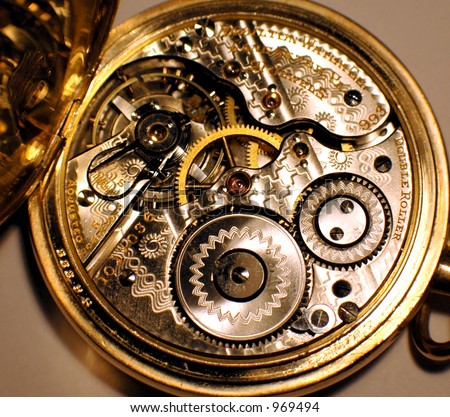
I have chosen to go with my second idea, which involves a bubble floating up and then hardening into stone. The stone will then fall down and crack open to reveal clockwork-like mechanisms.
Here are a couple of examples of the inner workings of pocket watches, which is similar to the sort of thing that I want to do.


Here are a couple of examples of the inner workings of pocket watches, which is similar to the sort of thing that I want to do.

I also found a Maya tutorial which shows you how to make a bubble.
Thursday, 14 March 2013
MDDN 241: Texture Ideas
These are the kinds of textures I could use for my rocky models in my first and second ideas:

And some ideas for the mossy texture in my third concept:


And some ideas for the mossy texture in my third concept:


Wednesday, 13 March 2013
MDDN 241: Initial Ideas
I have a few ideas about what I want to do for the first MDDN 241 project.
Idea #1:
I was thinking of starting out with a rough/bumpy rocky object, that would then melt and become liquidy or a puddle. The puddle would then harden into a smooth round solid surface.
Idea #2:
I am thinking of having something hard/bumpy fall onto the 'ground' and crack/break open to display something softer or more delicate. Perhaps a
Idea #3:I would start out with a clean, shiny, metallic object (possibly a pipe) that would become rusted and start to crack/decay. It would then become overgrown with moss and plant roots.
Idea #1:
I was thinking of starting out with a rough/bumpy rocky object, that would then melt and become liquidy or a puddle. The puddle would then harden into a smooth round solid surface.
Idea #2:
I am thinking of having something hard/bumpy fall onto the 'ground' and crack/break open to display something softer or more delicate. Perhaps a
Idea #3:I would start out with a clean, shiny, metallic object (possibly a pipe) that would become rusted and start to crack/decay. It would then become overgrown with moss and plant roots.
Subscribe to:
Posts (Atom)